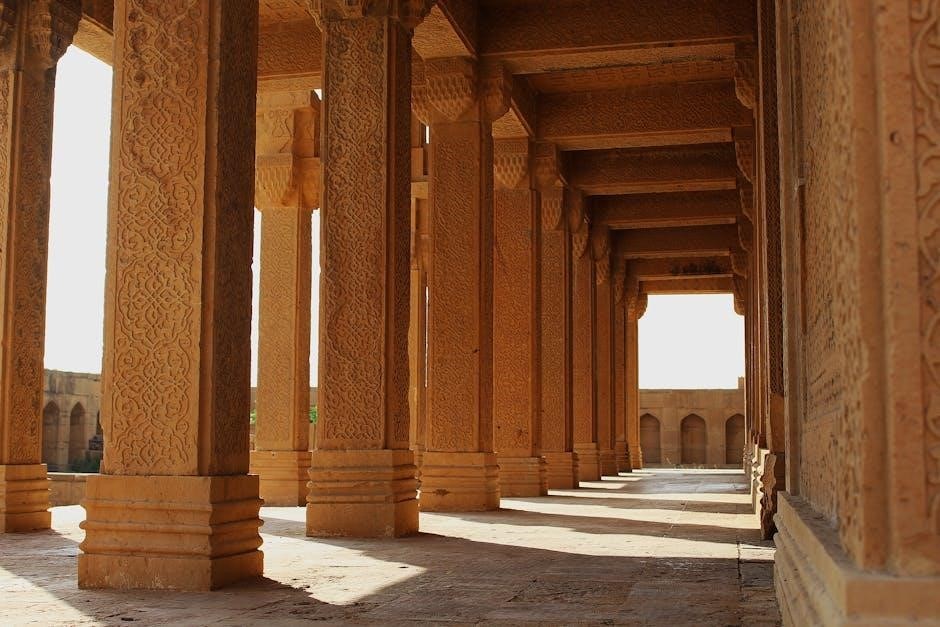
The Indus Valley Civilization‚ a Bronze Age society in South Asia‚ flourished around 7000 BCE․ It represents a pivotal moment in ancient history‚ showcasing remarkable cultural development․
Historical Context & Timeline (c․ 7000-1900 BCE)
The story of the Indus Valley Civilization unfolds over millennia‚ beginning around 7000 BCE with early agricultural settlements․ These nascent communities gradually evolved‚ laying the groundwork for urbanization․ By approximately 3300 BCE‚ the Early Harappan phase emerged‚ characterized by increasing trade and regional integration․
The Mature Harappan period (c․ 2600-1900 BCE) witnessed the peak of the civilization‚ with well-planned cities like Mohenjo-daro and Harappa flourishing․ This era showcased advanced urban planning‚ standardized weights and measures‚ and a sophisticated writing system․
Around 1900 BCE‚ a decline began‚ potentially linked to climate change and shifts in river courses; While the civilization didn’t vanish abruptly‚ its urban centers were largely abandoned‚ transitioning into later regional cultures․
Geographical Extent: Regions and Major Sites
The Indus Valley Civilization spanned a vast geographical area‚ primarily located in modern-day Pakistan and northwest India․ Its heartland encompassed the Indus River plain‚ extending from Gujarat in the south to the foothills of the Himalayas in the north․
Major sites include Mohenjo-daro and Harappa‚ showcasing remarkable urban planning․ Dholavira‚ Lothal‚ and Rakhigarhi represent significant regional centers‚ revealing diverse aspects of the civilization․ These settlements were strategically positioned along trade routes‚ facilitating economic exchange․
The civilization’s influence extended to parts of Afghanistan and Iran‚ indicating a broad network of interaction and cultural exchange across ancient South Asia․

Key Features of Indus Valley Civilization
Distinctive characteristics included advanced urban planning‚ standardized weights and measures‚ sophisticated drainage systems‚ and a unique script still awaiting full decipherment․
Urban Planning and Architecture: Mohenjo-daro & Harappa
Mohenjo-daro and Harappa exemplify the Indus Valley Civilization’s remarkable urban planning․ These cities showcased a grid-like layout‚ with streets intersecting at right angles‚ demonstrating advanced mathematical and engineering skills․ Buildings were constructed primarily from standardized baked bricks‚ ensuring durability and uniformity․
Residential areas featured well-planned houses‚ often multi-storied‚ with private wells and bathrooms connected to the sophisticated drainage system․ Public structures‚ like the Great Granary‚ suggest centralized storage and resource management․ The cities’ layout prioritized sanitation and efficient living‚ a testament to the civilization’s organizational capabilities․ Architectural consistency across sites indicates a degree of centralized control or shared cultural practices․
The Great Bath: Significance and Function
The Great Bath at Mohenjo-daro stands as one of the most iconic structures of the Indus Valley Civilization․ This large‚ brick-lined pool‚ measuring approximately 12 meters by 7 meters‚ was meticulously waterproofed with bitumen․ Its precise function remains debated‚ though ritual bathing is a prominent theory․
The surrounding changing rooms and adjacent structures suggest a communal space dedicated to purification or religious ceremonies․ Some scholars propose its use for elite social gatherings or important civic rituals․ The Great Bath’s construction demonstrates advanced hydraulic engineering and highlights the civilization’s emphasis on cleanliness and possibly‚ spiritual practices․ It remains a compelling enigma‚ offering insights into Indus beliefs․
Drainage Systems and Sanitation
Indus Valley Civilization’s urban planning was remarkably advanced‚ particularly in its sophisticated drainage and sanitation systems․ Cities like Mohenjo-daro and Harappa featured well-planned networks of brick-lined drains that ran alongside streets․ These drains efficiently carried wastewater away from homes and public areas․
Individual houses were often connected to the main drainage system‚ showcasing a high level of public health awareness․ Covered drains minimized odor and prevented contamination․ Soak pits and cesspools were utilized for waste disposal․ This commitment to sanitation was unparalleled for its time‚ demonstrating a focus on hygiene and public well-being‚ setting it apart from contemporary civilizations․

Economic and Social Life
The Indus Valley people engaged in agriculture‚ trade‚ and craft specialization‚ fostering a complex society with evidence of social stratification and organized economies․
Agriculture and Irrigation Techniques
The Indus Valley Civilization’s prosperity was fundamentally rooted in its advanced agricultural practices․ Evidence suggests the cultivation of wheat‚ barley‚ cotton‚ peas‚ and sesame‚ demonstrating a diverse crop portfolio suited to the regional climate․ Crucially‚ the civilization mastered irrigation techniques to manage the unpredictable nature of the Indus River and its tributaries․
Canals‚ wells‚ and reservoirs were employed to divert water for crop cultivation‚ particularly during the drier seasons․ The fertile alluvial plains provided rich soil‚ enhancing agricultural yields․ This surplus production supported a growing population and facilitated trade․ Furthermore‚ the standardization of weights and measures likely aided in the equitable distribution of agricultural produce‚ showcasing a sophisticated level of economic organization within the Indus communities․
Trade and Commerce: Internal and External Networks
The Indus Valley Civilization thrived on a robust network of trade‚ both internally within the vast geographical expanse of the civilization and externally with distant regions․ Evidence points to extensive trade relations with Mesopotamia‚ evidenced by the discovery of Indus seals and goods in Mesopotamian cities‚ and vice versa․
Internal trade was facilitated by the Indus River and its tributaries‚ serving as vital transportation arteries․ Standardized weights and measures suggest a sophisticated system for regulating commerce․ Goods exchanged included agricultural products‚ crafts‚ and raw materials․ This interconnectedness fostered economic growth and cultural exchange‚ solidifying the Indus Valley’s position as a major regional power․
Craft Specialization and Industries
The Indus Valley Civilization demonstrated remarkable craft specialization‚ indicating a complex division of labor․ Archaeological evidence reveals highly skilled artisans producing a diverse range of goods․ Pottery was a prominent industry‚ with mass-produced ceramics showcasing standardized designs and quality․ Bead making‚ utilizing materials like carnelian and steatite‚ flourished‚ creating intricate jewelry․
Metallurgy‚ particularly in copper and bronze‚ was advanced‚ producing tools‚ weapons‚ and ornaments․ Seal carving‚ featuring intricate animal motifs and script‚ was a unique Indus craft․ This specialization suggests a well-organized economy supporting full-time artisans and contributing significantly to the civilization’s prosperity․
Social Organization: Evidence and Interpretations
Indus Valley Civilization’s social structure remains debated due to the undeciphered script․ However‚ archaeological findings offer clues․ The uniformity in urban planning and housing suggests a degree of social order‚ though variations in house sizes indicate social stratification․ Elite residences‚ often larger with better amenities‚ imply a ruling class or wealthy merchants․
The absence of grand palaces or monumental tombs‚ unlike contemporary civilizations‚ suggests a less hierarchical society․ Standardized weights and measures point to centralized control or widespread cooperation․ Evidence of craft specialization implies distinct occupational groups․ Interpretations range from egalitarian communities to complex‚ stratified societies with varying levels of power and influence․
Political Organization and Governance
Political structures in the Indus Valley Civilization are debated‚ with theories suggesting either centralized authority or decentralized governance through regional cooperation and trade networks․
Debates on Political Structure: Centralized vs․ Decentralized
The political organization of the Indus Valley Civilization remains a significant enigma for archaeologists and historians․ A central debate revolves around whether the civilization was governed by a unified‚ centralized authority‚ or a network of independent‚ self-governing city-states․ Evidence supporting a centralized system includes the remarkable standardization of weights‚ measures‚ and brick sizes across vast geographical areas․
However‚ the lack of monumental structures typically associated with centralized power – like palaces or clear evidence of a ruling class – challenges this notion․ Alternatively‚ a decentralized model proposes that local elites or merchant groups controlled individual cities‚ cooperating through established trade routes and shared cultural practices․ The uniformity observed could then be attributed to practical needs and economic interdependence rather than direct political control․ Further research and discoveries are crucial to resolving this ongoing scholarly discussion․
Standardization of Weights and Measures
A defining characteristic of the Indus Valley Civilization is the remarkable standardization of weights and measures throughout its extensive territory․ Excavations reveal a consistent system based on a binary and decimal ratio‚ utilizing cubical weights made of chert․ These weights were meticulously crafted‚ demonstrating a high degree of precision and mathematical understanding․
Linear measurements were also standardized‚ evidenced by consistent brick dimensions used in construction across different settlements․ This uniformity facilitated trade‚ construction projects‚ and administrative efficiency․ The standardization suggests a centralized authority or a strong network of cooperation among cities‚ enabling seamless economic exchange․ This level of precision is unparalleled in contemporary civilizations‚ highlighting the advanced organizational capabilities of the Indus people;
Religion and Beliefs
Religious practices of the Indus people are inferred from seals and figurines‚ depicting deities like the Mother Goddess and figures resembling Proto-Shiva․
Evidence of Religious Practices: Seals and Figurines
Seals from the Indus Valley Civilization offer crucial insights into their potential religious beliefs․ These small‚ carved stone objects frequently depict animals‚ often accompanied by a script that remains undeciphered․ Some scholars believe these animals represent deities or totemic symbols‚ suggesting a reverence for nature and the animal world․
Figurines‚ primarily made of terracotta‚ provide further clues․ Female figurines‚ often adorned with elaborate headdresses and jewelry‚ are commonly interpreted as representations of a Mother Goddess‚ symbolizing fertility and creation․ Male figurines are less common but suggest the possible worship of proto-Shiva figures‚ hinting at early forms of Hindu deities․
The presence of ritualistic objects‚ like fire altars discovered at Kalibangan‚ also points towards organized religious practices․ However‚ the lack of monumental religious structures‚ like temples‚ makes definitive interpretations challenging‚ leaving much of their belief system shrouded in mystery․
The Mother Goddess and Proto-Shiva Figures
Terracotta figurines prominently feature representations interpreted as a Mother Goddess‚ embodying fertility and abundance – central to agricultural societies․ These figures‚ often robust and adorned‚ suggest a reverence for the feminine principle and the life-giving power of nature․ Their widespread presence across Indus sites indicates a common religious theme․
Alongside the Mother Goddess‚ intriguing figures resembling early forms of Shiva‚ known as “proto-Shiva‚” have been discovered․ These depict a seated figure‚ often surrounded by animals‚ possibly representing a yogic posture or a deity associated with wild animals and asceticism․
The connection between these figures and later Hindu traditions is a subject of ongoing debate‚ but they offer compelling evidence of the roots of certain Hindu deities within the Indus Valley Civilization’s religious landscape‚ hinting at cultural continuity․
Possible Connections to Later Hindu Traditions
Scholars propose intriguing links between Indus Valley religious practices and the development of Hinduism․ The prominence of the Mother Goddess aligns with later Hindu worship of goddesses like Durga and Lakshmi‚ representing divine feminine energy․ Similarly‚ the “proto-Shiva” figures bear resemblance to the ascetic and powerful Shiva found in Hindu mythology․
The emphasis on ritual purity‚ suggested by the Great Bath and sophisticated drainage systems‚ may foreshadow later Hindu concepts of purification and temple rituals․
Furthermore‚ certain Indus symbols – like the swastika – appear in later Hindu iconography‚ though their meanings may have evolved․ While direct continuity is debated‚ the Indus Civilization likely contributed to the religious milieu from which Hinduism eventually emerged‚ offering a foundational layer to its complex beliefs․
Decline of the Indus Valley Civilization
Climate change‚ specifically prolonged droughts around 4‚250 years ago‚ significantly weakened the Harappan civilization‚ alongside shifting river courses and potential migration theories․
Climate Change and Drought as Contributing Factors
Recent analysis strongly suggests that substantial climate shifts played a crucial role in the Indus Valley Civilization’s decline․ Specifically‚ evidence points towards two major‚ prolonged drought periods impacting the region approximately 4‚250 years ago․ These droughts severely stressed agricultural systems‚ the very foundation of the Harappan society‚ leading to widespread resource scarcity and potential famine․
The civilization‚ heavily reliant on monsoon rains for irrigation‚ would have been exceptionally vulnerable to sustained reductions in precipitation․ Diminished water availability likely impacted crop yields‚ trade networks‚ and overall societal stability․ This environmental stress‚ coupled with other factors‚ created a cascading effect that ultimately contributed to the civilization’s fragmentation and eventual abandonment of major urban centers․
River Course Changes and Flooding
Significant alterations in the courses of the Indus River and its tributaries likely exacerbated the challenges faced by the Indus Valley Civilization․ Tectonic activity and natural geological processes could have caused rivers to shift their paths‚ disrupting established irrigation systems and agricultural lands․ This would have led to decreased agricultural productivity and increased vulnerability to flooding․
Changes in river flow patterns could also have impacted trade routes reliant on river transport․ Increased frequency and intensity of flooding events‚ potentially linked to these river course changes‚ would have damaged infrastructure‚ destroyed settlements‚ and further strained resources․ These hydrological shifts‚ combined with climate-related stresses‚ contributed to the civilization’s decline․
Possible Aryan Migration Theories (and current scholarly debate)
Historically‚ the decline of the Indus Valley Civilization was linked to the arrival of Indo-Aryan groups‚ suggesting migration and potential conflict․ This theory‚ rooted in early interpretations of Vedic texts‚ proposed that Aryans invaded and supplanted the Harappan culture․ However‚ modern scholarship increasingly challenges this invasion model․
Current research emphasizes a more complex process of cultural exchange and assimilation‚ rather than outright conquest․ Genetic studies and archaeological evidence suggest a gradual migration of people and ideas over an extended period․ The debate continues‚ with scholars questioning the very notion of a distinct “Aryan” identity and focusing on nuanced interactions between diverse populations․

Legacy and Rediscovery
Archaeological excavations unveiled the Indus Valley Civilization‚ sparking global fascination with its antiquity․ The undeciphered script remains a key challenge for researchers today․
Archaeological Excavations and Key Discoveries
Significant discoveries began with explorations in the 1920s‚ revealing the scale of the Indus Valley Civilization․ Initial findings at Harappa and Mohenjo-daro captivated archaeologists‚ showcasing advanced urban planning․ Subsequent excavations unearthed standardized weights‚ intricate seals‚ and sophisticated drainage systems‚ demonstrating a highly organized society․
Further research at sites like Dholavira and Lothal expanded our understanding of their trade networks and agricultural practices․ The recovery of artifacts – pottery‚ jewelry‚ and tools – provides invaluable insights into daily life․ These excavations continue to reshape our perception of this ancient culture‚ highlighting its ingenuity and complexity․ The ongoing analysis of these finds promises even more revelations about the Indus people․
The Indus Script: Decipherment Challenges
The Indus script‚ found on seals and pottery‚ remains undeciphered despite decades of research․ Unlike Egyptian hieroglyphs or Mesopotamian cuneiform‚ it lacks a bilingual text for comparison‚ hindering translation efforts․ The script’s brevity – most inscriptions contain only a few symbols – further complicates analysis․
Numerous theories have been proposed‚ but none have gained widespread acceptance․ The limited corpus of inscriptions and the uncertainty surrounding the language family spoken by the Indus people pose significant obstacles․ Statistical analysis and pattern recognition are employed‚ yet a definitive breakthrough remains elusive․ Continued research and new discoveries are crucial to unlocking the secrets held within this ancient writing system․
Modern Relevance and Cultural Significance
The Indus Valley Civilization continues to resonate deeply within modern South Asia‚ fostering a sense of shared heritage and national identity․ Archaeological discoveries spark public interest and inspire cultural pride‚ prompting re-evaluation of historical narratives․ The civilization’s advanced urban planning and sanitation systems offer valuable lessons for contemporary urban development‚ particularly in sustainable infrastructure․
Furthermore‚ debates surrounding the civilization’s decline – linked to climate change – hold crucial relevance in our era of environmental concerns․ The IVC serves as a potent reminder of the fragility of civilizations and the importance of ecological balance․ Its legacy encourages ongoing research and preservation efforts‚ ensuring its continued cultural significance for generations to come․